Prodotti della Ricerca
La ricerca condotta da Luca Evangelisti e colleghi si concentra su diverse aree chiave dell'ingegneria e della fisica applicata, con un'enfasi particolare sull'efficienza energetica degli edifici, le energie rinnovabili e le proprietà dei materiali.Efficienza Energetica degli Edifici e Prestazioni Energetiche
Un filone importante della ricerca riguarda l'ottimizzazione delle prestazioni energetiche degli edifici. Questo include lo sviluppo e l'applicazione di metodologie per calcolare gli impatti energetici, finanziari e ambientali dei sistemi energetici, utilizzando strumenti come TRNSYS e RETScreen.* Informing best practices using TRNSYS and RETScreen to calculate energetic, financial, and environmental impacts of energy systems for buildings.* An Experimental Direct Model for the Sky Temperature Evaluation in the Mediterranean Area: A Preliminary Investigation.* An Evaluation of the Environmental Payback Times and Economic Convenience in an Energy Requalification of a School.* On the Retrofit of Existing Buildings with Aerogel Panels: Energy, Environmental and Economic issues.* In situ thermal characterization of existing buildings aiming at NZEB standard: A methodological approach.* Building energy performance analysis: A case study.* Energy Performance and Thermal Comfort of a High Efficiency House: RhOME for denCity, Winner of Solar Decathlon Europe 2014.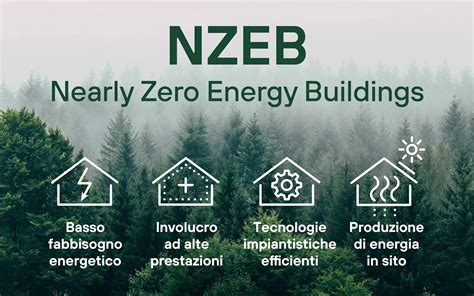
Caratterizzazione Termica dei Materiali e delle Pareti Edilizie
Una parte significativa degli studi è dedicata alla caratterizzazione termica dei materiali da costruzione e delle pareti. Sono state sviluppate e validate nuove metodologie, sia a contatto che senza contatto, per stimare parametri come il valore U e la trasmittanza termica.* A New Customized Measurement System for a Non-Contact, Enhanced Thermometric Method.* Development and validation of a non-contact method for U-value estimation in heritage and existing buildings.* Preliminary development of a non-contact method for thermal characterization of building walls: laboratory evaluation.* Thermal characterization of building walls using an equivalent modeling approach.* Comparison between Direct and Indirect Heat Flux Measurement Techniques: Preliminary Laboratory Tests.* Towards an improved thermometric method: Convective and radiative heat transfer for heat flux measurement through an indirect approach.* Convergence criteria analysis for thermal conductance measurements of building walls: A case study.* Comparison between Heat Flow Meter (HFM) and Thermometric (THM) Method for Building Wall Thermal Characterization: Latest Advances and Critical Review.* How Do Temperature Differences and Stable Thermal Conditions Affect the Heat Flux Meter (HFM) Measurements of Walls? Laboratory Experimental Analysis.* On the equivalent thermo-physical properties for modeling building walls with unknown stratigraphy.* On the influence of environmental boundary conditions on surface thermal resistance of walls: Experimental evaluation through a Guarded Hot Box.* A methodological approach for heat-flow meter data post-processing under different climatic conditions and wall orientations.* Comparison between heat-flow meter and Air-Surface Temperature Ratio techniques for assembled panels thermal characterization.* Influence of heating systems on thermal transmittance evaluations: simulations, experimental measurements and data post-processing.* Assessment of equivalent thermal properties of multilayer building walls coupling simulations and experimental measurements.* Influence of internal heat sources on thermal resistance evaluation through the heat flow meter method.* Design criteria for improving insulation effectiveness of multilayer walls.* Experimental investigation of the influence of convective and radiative heat transfers on thermal transmittance measurements.* Description of multilayer walls by means of equivalent homogeneous models.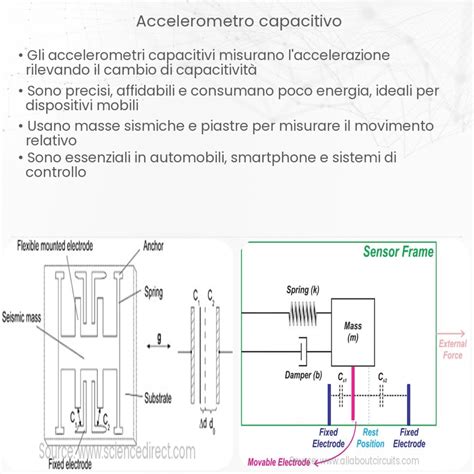
Tetti Verdi e Prestazioni Energetiche
Le ricerche hanno esplorato in dettaglio le prestazioni termiche ed energetiche dei tetti verdi, in particolare nel contesto del clima mediterraneo, confrontandoli con soluzioni di isolamento tradizionali.* A Systematic Review of Green Roofs’ Thermal and Energy Performance in the Mediterranean Region.* In Situ Winter Performance and Annual Energy Assessment of an Ultra-Lightweight, Soil-Free Green Roof in Mediterranean Climate: Comparison with Traditional Roof Insulation.* Experimental evaluation and numerical simulation of the thermal performance of a green roof.* On the energy performance of an innovative green roof in the mediterranean climate.* Monitoraggio e simulazione dinamica di un edificio pilota dotato di tetto verde.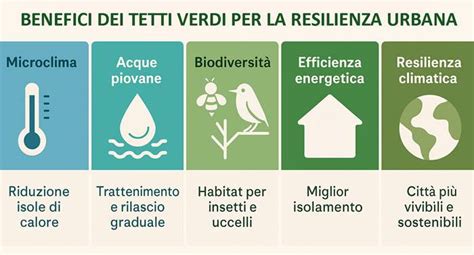
Fenomeno dell'Isola di Calore Urbana (UHI)
Sono stati condotti studi approfonditi sul fenomeno dell'isola di calore urbana a Roma, analizzando le implicazioni per le prestazioni energetiche degli edifici e proponendo strategie di mitigazione.* An Extensive Study of the Urban Heat Island Phenomenon in Rome, Italy: Implications for Building Energy Performance Through Data from Multiple Meteorological Stations.* Annual Comparison of the Atmospheric Urban Heat Island in Rome (Italy): An Assessment in Space and Time.* Space-time estimation of the urban heat island in Rome (Italy): Overall assessment and effects on the energy performance of buildings.* Urban Overheating Mitigation Strategies Opportunities: A Case Study of a Square in Rome (Italy).* Urban heat island mitigation strategies: Experimental and numerical analysis of a university campus in Rome (Italy).* On the assessment of urban heat island phenomenon and its effects on building energy performance: A case study of Rome (Italy).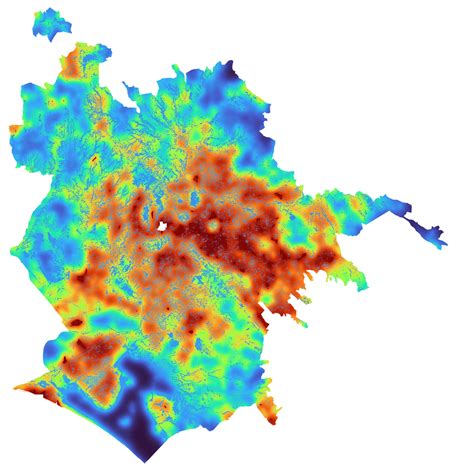
Altri Ambiti di Ricerca
La ricerca si estende anche ad altri settori, tra cui l'acustica degli edifici, i materiali da costruzione innovativi e l'analisi delle prestazioni dei collettori solari termici.* Layered Acoustic Structures with Equally Phased Elements.* Experimental Analysis of the Thermal Performance of Wood Fiber Insulating Panels.* On the ageing and weathering effects in assembled modular facades: On-site experimental measurements in an Italian building of the 1960s.* A review of structural, thermo-physical, acoustical, and environmental properties of wooden materials for building applications.* Critical Review and Methodological Approach to Evaluate the Differences Among International Green Building Rating Tools.* Influence of Insulating Materials on Green Building Rating System Results.* Latest trends in the world gas market: Economical, geopolitical and environmental aspects.Insegnamenti
Luca Evangelisti è attivamente coinvolto nell'attività didattica, coprendo una vasta gamma di corsi legati all'energetica, alla fisica tecnica e alla sostenibilità.Anno Accademico 2025/2026
* **ENERGETICA INDUSTRIALE** (20810128) * Curriculum: Tecnologie Per Il Mare nella Laurea in Ingegneria Meccanica - FISICA TECNICA MODULO I* **FISICA TECNICA** (20801810) * Curriculum: Meccanica nella Laurea in Ingegneria Meccanica* **LEZIONE ZERO SULLA SOSTENIBILITÀ: Città, energia e mobilità: azioni locali, impatti globali** (21010421) * Curriculum: Curriculum Unico nella Laurea Magistrale in Architettura - Progettazione Architettonica * Curriculum: Curriculum Unico nella Laurea Magistrale in Architettura - Progettazione Urbana * Curriculum: Curriculum Unico nella Laurea in Scienze Dell'architettura* **SOSTENIBILITÀ E IMPATTO AMBIENTALE** (20810070) * Curriculum: Curriculum Unico nella Laurea in Ingegneria Civile E Ambientale * Curriculum: Infrastrutture Viarie nella Laurea Magistrale in Ingegneria Delle Infrastrutture Viarie E Trasporti * Curriculum: Trasporti nella Laurea Magistrale in Ingegneria Delle Infrastrutture Viarie E Trasporti * Curriculum: Energetica E Sostenibilità nella Laurea Magistrale in Ingegneria Meccanica * Curriculum: Rischi Naturali E Gestione Del Territorio nella Laurea Magistrale in Geologia E Tutela Dell'ambienteAnno Accademico 2024/2025
* **ENERGETICA INDUSTRIALE** (20810128) * Curriculum: Tecnologie Per Il Mare nella Laurea in Ingegneria Meccanica - FISICA TECNICA MODULO I* **FISICA TECNICA** (20801810) * Curriculum: Meccanica nella Laurea in Ingegneria Meccanica* **MARINE SUSTAINABILITY AND ENVIRONMENTAL IMPACT ASSESSMENT** (20810167) * Curriculum: Curriculum Unico nella Laurea Magistrale in Ingegneria Costiera E Marina Sostenibile* **SOSTENIBILITÀ E IMPATTO AMBIENTALE** (20810070) * Curriculum: Curriculum Unico nella Laurea in Ingegneria Civile - N0 (A-Z) * Curriculum: Idraulica nella Laurea Magistrale in Ingegneria Civile Per La Protezione Dai Rischi Naturali * Curriculum: Strutture nella Laurea Magistrale in Ingegneria Civile Per La Protezione Dai Rischi Naturali * Curriculum: Energetica E Sostenibilità nella Laurea Magistrale in Ingegneria Meccanica * Curriculum: Rischi Naturali E Gestione Del Territorio nella Laurea Magistrale in Geologia E Tutela Dell'ambiente🖥️ WEBINAR | SOSTENIBILITÀ AMBIENTALE PER UN FUTURO A IMPATTO ZERO: QUADRO NORMATIVO E CASI STUDIO
Programma del Corso: Superconduttività
Il programma del corso sulla superconduttività copre in dettaglio i fondamenti teorici, i materiali, i fenomeni chiave e le applicazioni di questa affascinante area della fisica.1. Fondamenti e Complementi
- Resistenza nulla, correnti persistenti.
- Persistent Current Switch.
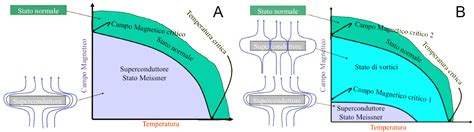
- Effetto Meissner.
- Superconduttori di tipo I e II.
- Campi critici.
- Quantizzazione del flusso.
- Equazioni dei London.
2. Materiali Superconduttori
- Elementi.
- Leghe, composti binari.
- Cuprati.
- Altri superconduttori.
3. Cenni alla Teoria Microscopica
- Coppie di Cooper: discussione qualitativa.
- Lunghezza di coerenza BCS.
- Stato fondamentale BCS.
- Quasiparticelle.
- Effetti a temperatura non nulla.
- Evidenze sperimentali: effetto isotopico; assorbimento di radiazione elettromagnetica: la gap.
- Corrente di depairing.
4. Effetto Josephson
- Effetto Josephson (derivazione di Feynmann).
- Modello RCSJ.
- Effetto Josephson ac.
- Shapiro steps.
- Standard di tensione.
- SQUID; Effetto del campo magnetico, corrente critica e interferenza quantistica.
- Caso di schermaggio debole.
- Applicazioni.
5. Proprietà di Trasporto
- Modello a due fluidi.
- Conducibilità ac.
- Impedenza superficiale.
- Applicazioni: linee di ritardo; filtri; cavità acceleratrici.
6. Termodinamica dello Stato Superconduttivo
- Energia libera di Gibbs.
- Energia di condensazione.
- Teoria di Ginzburg-Landau.
- Lunghezze caratteristiche.
- Energia superficiale: superconduttori di tipo II.
7. Superconduttori di Tipo II
- Flussoni.
- Reticolo di Abrikosov.
- Campi critici inferiore e superiore.
- Moto flussonico.
- Pinning.
- Irreversibilità.
- Modello di Bean.
- Flux-flow, flux-creep, TAFF.
8. Argomenti Ulteriori
- Superconduttori anisotropi.
- Levitazione magnetica.
- Applicazioni di potenza, cavi e magneti per la fusione nucleare.
9. Esperienze di Laboratorio, Dimostrazioni
Testi Adottati
- Buckel, R. Kleiner, "Superconductivity - Fundamentals and Applications", Wiley
- C. Enss, S. Hunklinger, "Low-Temperature Physics", Springer
- K. Fossheim, A. Orlando, K.A. Delin, "Foundations of Applied Superconductivity", Addison Wesley
- Si vedano anche le slide del corso "Applied Superconductivity" del MIT (Open CourseWare)
- F. J. Owens, Ch. P.
tags: #evangelisti #semiconduttori #romatre